
Buying & Selling REAL ESTATE (specialists In Barcelona & Catalonia )
- offering the largest variety of units suiting every budget
- full legal services related to the purchase of the property
- photos and info about properties sent to you by email
- organized tours to see the properties
- prices of real estate in Spain is at its lowest since 2009 (almost 50 % down with prospects of increase during 2014 due to demand from foreigners buying properties thanks to new residence law)
- Contacts with local Banks ready to offer mortgage based on 50 % of the value of the property after fulfilling their requirements. (case by case )
Why buying Real estate in Spain in 2014 ?
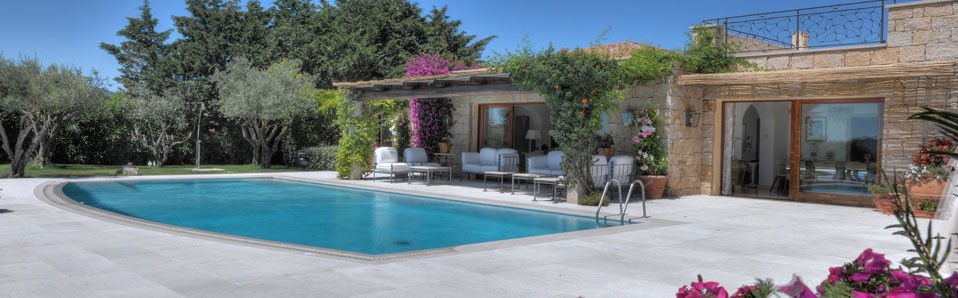
Spanish Property Doctor Mark Stücklin says prices in some prime areas of Spain are set to rise modestly in 2014, but, for now, values in some less desirable areas have halved
Values of some prime property in Spain could rise next year, a leading market commentator predicts.
Mark Stücklin, who is known as the Spanish Property Doctor and runs the www.spanishpropertyinsight.com website, says the Spanish property market is at last bottoming out.
He tells OPP Connect, “I think that in retrospect we will look back on 2013 as the bottom of the market in terms of transactions. Even so, I expect average prices to continue falling next year thanks to the oversupply of homes on the market.
“But prime property on the coast and in the big cities will not go down any more. I think we could even see modest gains next year in some segments.”
The Spanish market will benefit from the recent move by The European Central Bank (ECB) to lower the Eurozone base rate to a historic low of 0.25%, he says.
“Lower rates reduce the cost of money to lenders and will make it easier and more attractive for them to lend to the Spanish property sector and home buyers. This should mean at least a bit more liquidity in the housing market, though there will be no rapid turnaround.”
The latest data from agent Tecnocasa shows its prime property prices are now stable, but, in the cities and regional capital price falls have accelerated in the past 12 months.
Prices of older flats in buildings without a lift in the province of Castellón, part of the Valencian Community, home to the Costa del Azahar – one of the most attractive and least exploited coastal regions of Spain – fell by more than half, from €800-€300 per square metre, leaving them well-below replacement costs.

Prices also fell by 50% in Huesca, Aragon, (pictured) from €800-€400 per square metre and by a third in Galicia’s La Coruña, from €1,650-€1,100 per square metre and in the attractive city of Teruel, in Aragon, once featured as a potential investment hotspot by A Place In The Sun, from €900-€600 per square metre.
Although house prices fell by 10-20% in most Spanish cities, they held steady in the prime areas including Madrid’s Calle Serrano at €10,500 per square metre, Barcelona’s Paseo de Gracia, at €8,500 per square metre and Marbella’s Puerto Banus at €5,250 per square metre.
But there the move by the ECB to lower the Eurozone bank rate is likely to stoke up demand, says Mr Stücklin.
The 12-month Euribor rate, most commonly used to calculate Spanish mortgage repayments also dropped from 0.534% to 0.506%, its biggest one-day fall in two years.
“In the very short-term, nothing will change, as Spanish lenders continue with their agenda of hoarding cash and reducing exposure to real estate. But after five years were are approaching the end of that story, and experts forecast that lenders will start to open up the credit taps a bit in 2014, albeit on a selective basis. Lower base rates will make it easier for the banks to lend.”
Gonzalo Bernardos, a professor at the University of Barcelona and leading authority on Spain’s property sector, expects cheaper money to stimulate sales. He does not forecast a sudden rebound in house prices, but believes they will stabilise.
“The expectation that house prices have touched bottom will start to take hold,” he says. “People who can’t buy a house today because they can’t get credit, or it’s too expensive, will be able to do so in 2014.”
*Overseas mortgage specialist Conti believes confidence is returning to the Spanish property sector as demand from British investors has substantially increased.
In November alone, Spain has so far accounted for 43 per cent of enquiries received at Conti, higher than any other country including France. The story was similar in September and October, with Spain outperforming any other destination.
Clare Nessling, Director at Conti, says, “This is the first time since 2008 that Spain has accounted for so many of our enquiries over so many months. It was very popular over the summer period, but there’s been a definite shift over the last six weeks in particular.
“A number of factors are pulling buyers in. Tourism is booming, access is easy and the culture is familiar, but it has also become much more affordable – mortgage rates are very low, the pound has been getting stronger, and prices are still bottoming out in some areas.
“It’s a great time to buy and people who have been putting their plans on hold for the last year or two are taking advantage of the favourable conditions open to them, and deciding to go for it.”
The recent approval of Spain’s ‘golden visa’ offered to non-European Union residents on purchases of property over €500,000 is also providing a welcome boost.
Estate agents in Spain are also reporting increased activity. Peter Birkett, from agent Property Repossessions Spain, at www.propertyrepossessionsspain says, “After a very difficult few years, prices are starting to creep back up in some areas, and people who have been watching the market are putting their plans into action in case they end up missing out on the best possible deals.
“I’ve recently sold properties to British buyers who have been holding out for the last three years, but the current market conditions have convinced them to make the purchase. Confidence amongst UK buyers is definitely returning, with the Costa Blanca, the Costa Almeria and the Murcia area proving to be very popular.”
Mr Birkett says there are bargains to be had at the moment. “We have a two-bed, two bathroom property in Almeria on our books at the moment with a sale price of €65,500, down from an original asking price of €298,000. Bargains like this won’t last forever.”
Spanish lenders are still willing to provide finance to foreign nationals, particularly for those with a sound financial profile. Applicants can generally borrow up to 65% of the value of the property and rates start from 3.23%, says Conti.
Neighborhoods of Barcelona
Barrio Gótico (Gothic Quarter)
- Broadly speaking the Barrio Gótico (Barri Gòtic in Catalan) lies between the Ramblas and Via Laeitana, and runs down from Plaza Cataluña to the Paseo de Colon at the old port. This is one of Barcelona’s most touristy areas.
- Being the oldest part of Barcelona the Barrio Gótico has a lot of charm. However the downside to this is that many of the streets are narrow, old buildings often don’t have lifts installed and many properties are in poor condition and need considerable reforms. The narrowness of the streets means that apartments tend to be starved of natural light and noise can be a problem, especially so given the amount of tourists wondering around the area day and night. Much of the area is difficult to access by car, which has an impact on the convenience of living there. It is not a family-friendly area to live in.
- When the Eixample was built during the 19th Century local people with money moved out of the Barrio Gótico to take advantage of the wider streets and better quality of life that the Eixample had to offer. For much of the last century wealthy locals avoided the Barrio Gótico and the lack of residential wealth meant that the Barrio Gótico became rather shabby and sleazy. However over the last 10 years the area has been transformed and is now one of Barcelona’s trendiest districts. Hip local professionals such as designers have moved back into the area and foreign buyers, drawn by style combined with old world charm, have had a significant impact on the real estate market in the Barrio Gótico. Rising prices have gentrified the area and petty crime has fallen, though it is still a problem. As a general rule of thumb the further down you go towards the Paseo De Colon the shabbier the streets and the higher the risk of petty crime. However the quality improves again once you cross Calle Ample.
- Developers have been at work in the Barrio Gótico though much of the development has been focused on converting buildings into hotels. However private apartments have also been refurbished though prices for these types of properties have risen dramatically throughout the beginning of the decade.We expect the gentrification of the Barrio Gótico to continue as it increasingly appeals to foreign buyers and trendy locals. However the area will not attract families and older buyers due to the noise and inconvenience of living in the Barrio Gótico. This limits the pool of buyers more so than in other areas like the Ensanche.
Raval
- The Raval lies across the Ramblas from the Barrio Gótico and stretches over to the Ronda De Sant Pau.
- The Raval has always been one of Barcelona’s poorest districts, home to the most recent immigrants in each period, and a den of iniquity catering to the tastes of sailors given its proximity to the old port.
- Today, as ever, the Raval is very much an immigrant district, with a high proportion of immigrant groups living there. Many locals from Barcelona will not choose to live in a district with this type of resident profile if they can avoid it.
- The Raval suffers from some of the highest levels of petty crime in Barcelona and this is a serious problem for people who live or rent in the area. Many tourists are also affected by petty crime during their brief forays into the district. Petty crime means that renting out property in the Raval, whether on short or long term contracts, can be a serious problem for owners and rental management companies.
- Much of the Raval is comprised of poor quality housing stock set along narrow streets (a function of the districts origins as a deprived neighbourhood). Many properties for sale in the Raval will need significant refurbishment and few buildings have lifts installed. Furthermore the municipal government’s plans in the district mean that many properties are ‘afectada’. This means that, at some point in the future, owners might be served with a compulsory purchase order and be forced to sell their properties to the local government below the market price. Buyers of real estate in the Raval should always have a lawyer check whether a property is ‘afectada’ or not.
- Some say that the Raval has great potential for gentrification and hence capital appreciation. It is well situated in the centre of the city and according to this theory all that is needed is for prices to rise sufficiently to push out the criminal elements and suck in trendy professionals with money looking for a new hip and edgy central district. The process starts with early pioneers who can cope with the risks and who are drawn in by the relatively low prices. They are followed by entrepreneurs opening trendy bars, restaurants, shops and galleries, much as has happened in areas of North West London and lower Manhattan in New York. This creates a virtuous circle that improves the area and opens up the market to more risk-adverse buyers who are attracted by the central location. This was expected to happen once Barcelona’s Museum of Modern Art (MACBA) was opened in the Raval, and to a certain extent it has in parts of the Raval above Calle Hospital and between the MACBA and The Ramblas. These are also streets in which some of the best buildings in the Raval are to be found and in which the Municipal government has invested resources into improvements. However the process seems to have lost momentum with the result that the top corner of the Raval between the MACBA and The Ramblas and above Calle Hospital is attractive and safe by the standards of the Raval, whilst the rest of the district leaves a lot to be desired in terms of crime, housing stock and facilities. Will the process of gentrification continue to the rest of the Raval? Given its central location and the shortage of space in Barcelona it is likely that it will. However it is going to take longer than expected.
- As a general rule the worst areas of the Raval are below Calle Hospital and also in the triangle between Ronda De Sant Antoni, Joaquín Costa and Sant Antoni Abad. In the ‘bad’ areas the closer to The Ramblas the better.
- When buying in the Raval we recommend using more caution than for other areas of Barcelona. Most property will need refurbishment, which is a big headache for overseas buyers. Other than it’s central location it is not a convenient district to live in and there are high levels of petty crime, relatively poor housing stock and a significant number of properties that could be affected by compulsory purchase orders in the future. Furthermore it is not an ideal district for renting properties; good quality rental agents do not like managing real estate in the Raval because their tourist clients and staff are much more likely to experience personal safety problems. Our research shows that despite the high number of properties for sale in the Raval, there are relatively few apartments for rent (not including properties for rent to immigrants which is a rental market best left to the ‘experts’), which says something about the difficulty of renting out property in the Raval. On the other hand the Raval’s location in the centre of the city and close to many of Barcelona’s main tourist attractions means that it has considerable room for improvement, which, if it were to happen, would be reflected in rising real estate prices. In our opinion this improvement is likely to happen but will take time and may not be a smooth process. In the meantime most of the Raval is only suitable for intrepid buyers who are in a position to cope with owning real estate in the Raval. In particular buyers with plans to rent out property in the Raval should be very clear about the rental market in the Raval before proceeding to buy.
Ensanche (Eixample in Catalan)
- The Ensanche is divided into the Ensanche Izquierda (Left Ensanche) to the left of Paseo De Gràcia as you walk up it from Plaza Cataluña and the Ensanche Derecha (Right Ensanche) to the right of Paseo De Gràcia. A district know as La Sagrada Familia – around the famous Segrada Familia cathedral by Guadí – will also be considered as part of the Ensanche for the purposes of this guide.
- The Ensanche was built during the 19th Century in the first big expansion of Barcelona beyond its city walls. The construction of the Ensanche coincided with an explosion in local wealth earned from the industrialisation of Cataluña and repatriation of profits from places such as Cuba. Wealthy local families commissioned grand buildings from Modernist architects – the most famous of which was Gaudí – to demonstrate their wealth and social standing. This explains why the Ensanche is home to many of Barcelona’s most splendid buildings and has some of the best housing stock in Barcelona. A walk around the central parts of the Ensanche from Calle Ausiàs Marc up to Avenida Diagonal and from Calle Muntaner across to Paseo De Sant Juan will reveal many stunning beautiful façades and entrances. However beyond these streets there are few modernist buildings and the overall quality of the housing stock is lower, with many more buildings constructed between the 1960′s and 1980′s.
- At the time of the Ensanche’s construction the best apartments were built on the first floor – know as ‘principal’ – as the main residence of the owners of the building. This was because lifts did not exist in those days and owners did not relish walking up several flights of stairs to reach their homes. Therefore first floor apartments in the Ensanche have the highest ceilings and most elaborate interior finishings. Servants and other employees of the family used to live on the upper floors, which therefore had the most modest apartments in the building. This meant that Barcelona’s social classes were divided by floors rather than districts. In the present day the top floors in the Ensanche are now highly sought after as residential properties because lifts make them just as easy to reach whilst they are quieter than first floor apartments and benefit from more natural light. Large roof terraces are also highly valued in a city with such a good climate.
- The Ensanche has a grid system of city blocks built around large interior patios (know in Spanish as patio de manzana). The ground floors of buildings, which used to house factories, are now used as commercial premises. The large patio in the middle means that most apartments have a good natural source of light both at the front and back of the building.
- The Ensanche is home to an area know locally as the ‘cuadro de oro’ or golden box in English. This expression refers to the streets between Enrique Granados, Bruc, Diagonal and Gran Via. This area is the most exclusive part of the Ensanche, home to the finest buildings and is referred to as golden because the real estate prices are always robust. Enrique Granados and Calle Bruc are two of the best streets to live on in all of Barcelona.The Ensanche is one of Barcelona’s most desirable areas to live in. It is elegant, attractive, clean, central, safe, well communicated with excellent shopping and restaurants / bars and has a large housing stock of excellent quality. It attracts sophisticated buyers of all age groups (unlike the Old Town, which does not appeal to older buyers or families with children). Residents are predominantly affluent locals. Shopkeepers in the Ensanche tend to know their customers, which helps build a sense of community in the area. Everything in the Ensanche is within walking distance.
- The Left Ensanche, which also includes the Gay Ensanche (the gay community helped to revitalise the area after several decades of decline during the 60′s and 70′s), is home to a wide range of bars and restaurants. Beyond Calle Muntaner the streets become shabbier and buildings less impressive but nevertheless the area is attractive from a residential perspective, though not perhaps from a short-term rental perspective. The redevelopment of the old bull-fighting ring (Plaça De Braus Les Arenes) on the corner of Plaza De España along with the proximity to Montjuïc could have a beneficial impact on real estate and prices in the bottom corner of the Left Ensanche.
- The Right Ensanche below Diagonal and across to Paseo de Sant Juan is smaller than the Left Ensanche and has fewer bars and restaurants. However it has some of the best buildings in Barcelona and is one of the most exclusive residential districts in the city. Facilities are excellent (for instance fresh food markets and gyms), and the district is in the very centre of Barcelona with good access to all areas including Barcelona’s Old Town and beaches.
- The Sagrada Familia district of the Ensanche is a pleasant residential area though it does not have as many fine buildings as the more central areas of the Ensanche (with the obvious exception of the Segrada Familia itself). It lacks a sense of sophistication but it is well located and communicated. Properties with good views of the Cathedral command a premium. The streets around Paseo De San Juan are particularly attractive.
- Investors who are prepared to take on refurbishments should consider buying larger Ensanche apartments – generally bigger than 100 m2 – and converting them into stylish 2-bedroom apartments for which there is a growing market.
Gràcia real estate
- Gràcia used to be a village outside of Barcelona but as the city expanded it became one of Barcelona’s central residential districts.
- Rather like the Old Town Gràcia has a network of narrow streets that makes the area feel cramped. However it also has a high number of attractive squares to compensate.
- Gràcia has a youthful residential profile and is home to a large number of bars and restaurants that appeal to a younger clientele. The downside is that street noise can be a problem for residents.
- On balance Gràcia is an agreeable residential area with a good local feel to it and without the petty crime problems common in the Old Town. The streets between Via Augusta and Calle Verdi but below Astúries stand out.
Sarrià – Sant Gervasi real estate
- Centred on the Paseo De La Bonanova this district is one of Barcelona’s poshest residential areas and is 10 – 15 minutes by car from the centre of town.
- Some of Barcelona’s best hospitals / clinics and almost all the best schools are located in or near this district. Children can walk to school, which makes it very popular with affluent local families.
- In the streets above Bonanova you find individual houses and semi-detached properties. This is one of the closest areas to the centre of town where you can buy these kinds of properties. The high price of these properties reflects this fact.
- In contrast to the affluent neighbouring district of Pedralbes (see below) this area has a great community feel to it, with plenty of shops, bars and restaurants within walking distance. It is also well communicated with the centre of town by bus and metro.The Sarrià part of the district is especially attractive with a charming Spanish village feel to it.
- This area is perfect for comfortable living in pleasant, easygoing surroundings whilst only being a short taxi ride from the centre of town. It is also the perfect district for renting real estate on a short-term basis to MBA students at nearby business schools such as IESE and ESADE. MBA students tend to be affluent and well behaved tenants. This is a potentially profitable rental niche that is largely overlooked.
Pedralbes
- Pedralbes, like parts of Sant Gervasi, used to be an area where wealthy families had grand out-of-town homes. However as demand for housing grew in the 60′s and 70′s it was developed into a residential area offering upmarket apartments with communal gardens, pools and parking.
- Much of the recent architecture in Pedralbes is unattractive. Apartments may be big and the lifestyle convenient but the architectural language of the area is dull. Furthermore, the area lacks life, and in many places you need a car to get to anything resembling a shop, restaurant or bar. The good schools, large apartments, communal gardens, pools, parking and safe streets obviously appeal to families but beyond this the area is lacking character by Barcelona’s standards. Having said this there are of course some fabulous properties in Pedralbes – some of the grandest houses in Barcelona are located there – and parts of Pedralbes have their charm.
Sant Martí & Poblenou
- Sant Martí, which includes the area called Poblenou, is the backdrop to most of Barcelona’s best beaches. For most of the past century this area was neglected and few affluent locals, other than the community already residing there, would have chosen to live there.
- The street layout is based on the model used to develop the Eixample though the stock of real estate is completely different. The area originally emerged as one of Barcelona’s key industrial zones with factories and warehouses in abundance. This industrial development engulfed but did not overrun the village of Poblenou, which has managed to keep its village charm as can be seen from a stroll down the Rambla De Poblenou. Poblenou was a humble district where local tradesmen, factory workers and fishermen lived. This gave the area a strong sense of community that can still be felt today.
- In the present day Sant Martí is home to many small business and is also starting to attract larger national and international business. The contrast between daytime and night in Sant Martí is starling. During the day it is difficult to find parking and the area is heaving with business activity. At night parking is abundant the most streets are quiet, with the exception of the streets around the Rambla De Poblenou.
- As a district Sant Martí has some of the most exciting potential in Barcelona. It has a good location running along most of Barcelona’s best beaches yet it is well communicated and close to the centre of town. For the ’92 Olympics the local government developed the Vila Olímpica to house athletes and staff and as a consequence Sant Martí is now home to facilities such as the new Olympic port, the Icaria shopping / cinema complex, and the Hotel Arts – one of the best hotels in the world. More recently the Diagonal Mar residential complex has been built and the Forum hosted – both on the far side of Sant Martí as you move out of town. These are huge developments whose impact on the district will take time to be felt. However there is no doubt that they leave Sant Martí closer to the centre of town than before and will bring in money, interest and real estate buyers.
- Given the beachside location and number of old industrial buildings in Sant Martí this is a perfect district for redevelopment along the lines of Docklands in London, Manchester and Lower Manhattan in New York. Some of Barcelona’s most stylish lofts and hip architecture are already to be found here, and recently the ultra-chic restaurant / nightclub ‘Oven’ opened up as the first glamour destination in the area. Then of course there is the out-of-this-world ‘Els Pescadors’ restaurants in the Plaza Del Prim, surrounded by abandoned redbrick factory buildings and serving up the best seafood in town. We believe that the district has the potential to become one of the funkiest centre-of-town, Mediterranean-beachfront residential districts in all of Europe but it does depend upon the decisions of the municipal government. At present much of Sant Martí is given over to the@22 project in the hope that it will become one of Europe’s hottest new technology parks. The result is that much of the real estate in the area is classified as commercial and cannot be developed for residential purposes. Some developers have ignored this and gone ahead with residential redevelopments on commercial real estate but there are risks inherent in this course of action (not least of which is the difficulty that buyers have getting mortgages for this type of real estate). @22 has not been a great success due to the dotcom meltdown at the time it was launched but it might yet bring in tech companies and do wonders for the district. On the other hand it might starve the district of sufficient residential real estate and prevent it from taking off.
- Diagonal Mar deservers a mention of its own. Situated on the far side of Sant Martí, where Avenida Diagonal ends near the beach, Diagonal Mar is a luxurious modern residential development of high-rise apartment blocks that has sold extremely well to investors. The development offers beachside modernity, luxury, gardens, pools, tennis, parking and sea views, all within 15 minutes from the centre of the city. It is a type of Pedralbes on the beach but without the awful architecture. No doubt this will have a positive influence on real estate in Sant Martí but for the time being Diagonal Mar has a somewhat desolate feel to it. It lacks life and character and its proportions are impersonal. Furthermore it will have difficulty attracting affluent local families whilst all the good schools are on the opposite side of town. Nevertheless its advantages outweigh these disadvantages and given that it is still in parts a building site we expect the development to take on more charisma with time.
Poble Sec
- This is a small but agreeable residential area with a pleasant community feel to it. It falls within the district called Sants-Montjuïc and is located just below the hill of Montjuïc with all its theatres, galleries, gardens and Olympic sports facilities (where many concerts are now held). The Poble Sec is also just across the Avenida Del Parallel from the Eixample and the Raval, not far from the centre of town.